
Glockenspiels
Glockenspiels are bright, tuned percussion instruments with steel bars played using mallets. Known for their clear, bell-like tone, they are perfect for music education and classroom settings. These instruments are easy to set up, store, and ideal for ensemble work and teaching melodies.
Glockenspiels for Schools and Community Groups
When selecting a glockenspiel for Primary, Secondary, Adult, or SEND settings, focus on features that help lessons run smoothly. Look for clear pitch, easy note-finding, and simple storage. Many classroom models come as a set with an ABS carry case, supplied beaters, and etched pitch names on the bars.
… read more …Showing 8 results
About Glockenspiels
Glockenspiels are bright, tuned percussion instruments with steel bars played using mallets. Known for their clear, bell-like tone, they are perfect for music education and classroom settings. These instruments are easy to set up, store, and ideal for ensemble work and teaching melodies.
Glockenspiels for Schools and Community Groups
When selecting a glockenspiel for Primary, Secondary, Adult, or SEND settings, focus on features that help lessons run smoothly. Look for clear pitch, easy note-finding, and simple storage. Many classroom models come as a set with an ABS carry case, supplied beaters, and etched pitch names on the bars.
For mixed-ability classes and beginner musicians, choosing easy-to-use glockenspiels with visual note cues can make learning faster and more engaging. The clear tone of these instruments is perfect for developing rhythm and melodic skills in young learners.
Choose the Right Range (17 / 25 / 27 Notes)
- 17-note glockenspiel (C64–E80, fully chromatic): Compact and focused, perfect for beginner musicians, small groups, and simple melodies.
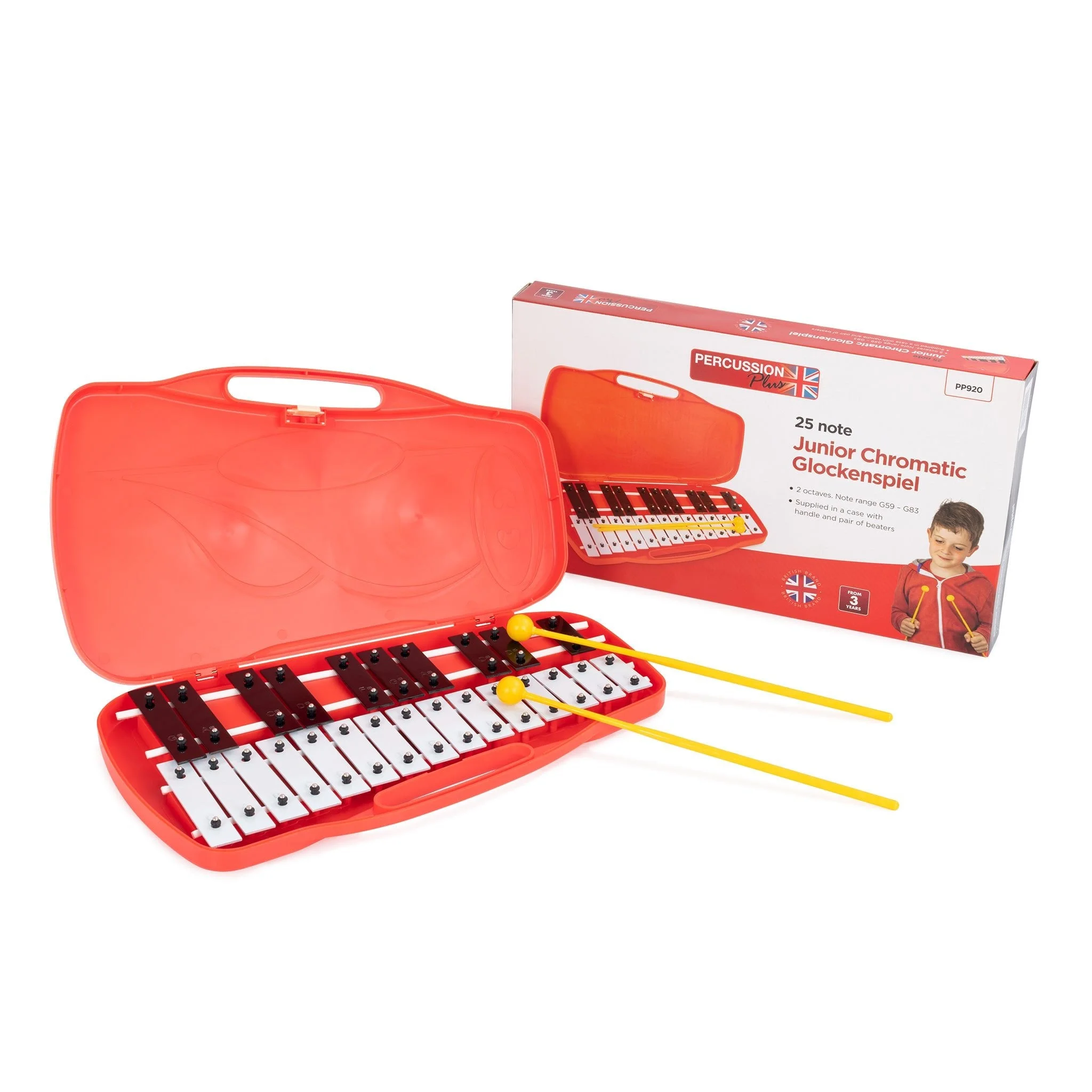
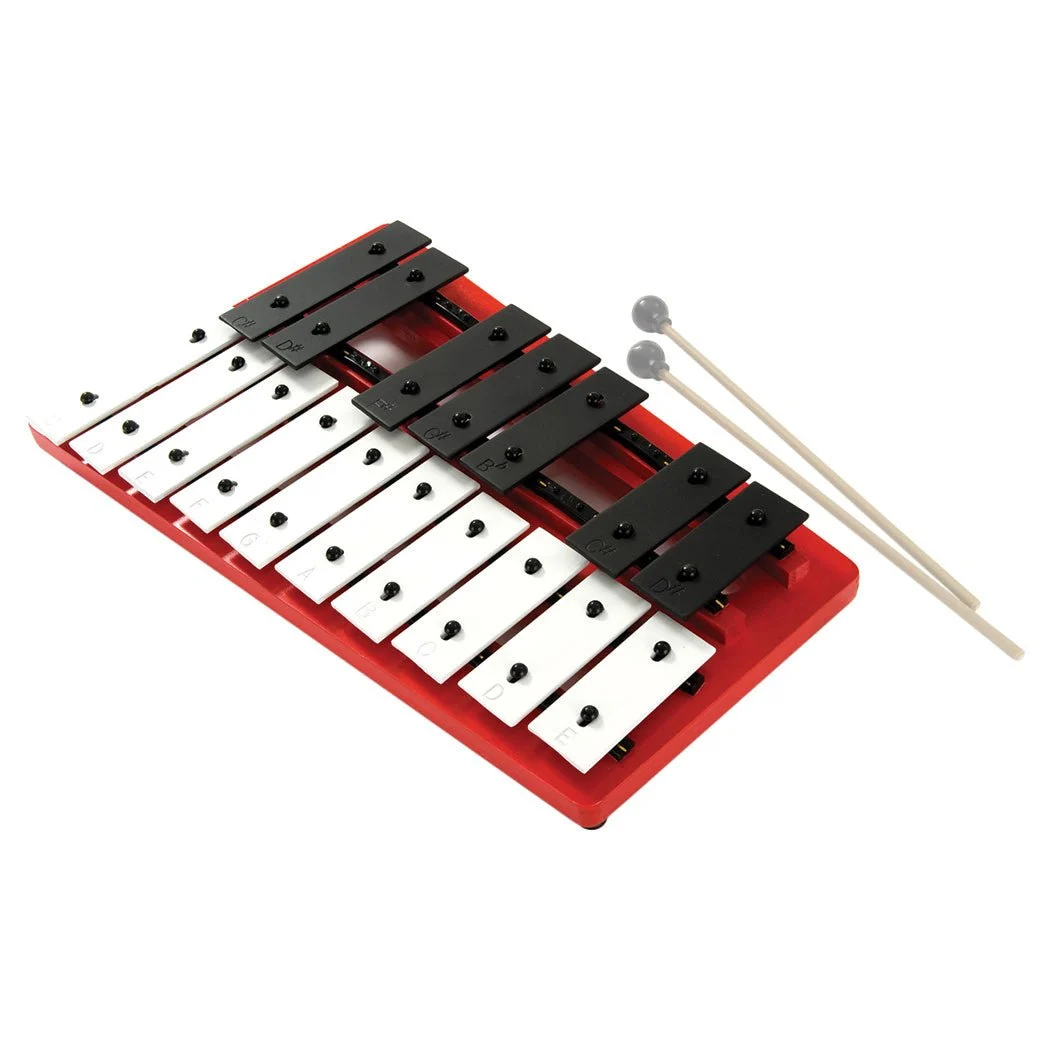
- 25-note glockenspiel (G59–G83, chromatic): A versatile "sweet spot" for schools that need a larger range without losing manageability.
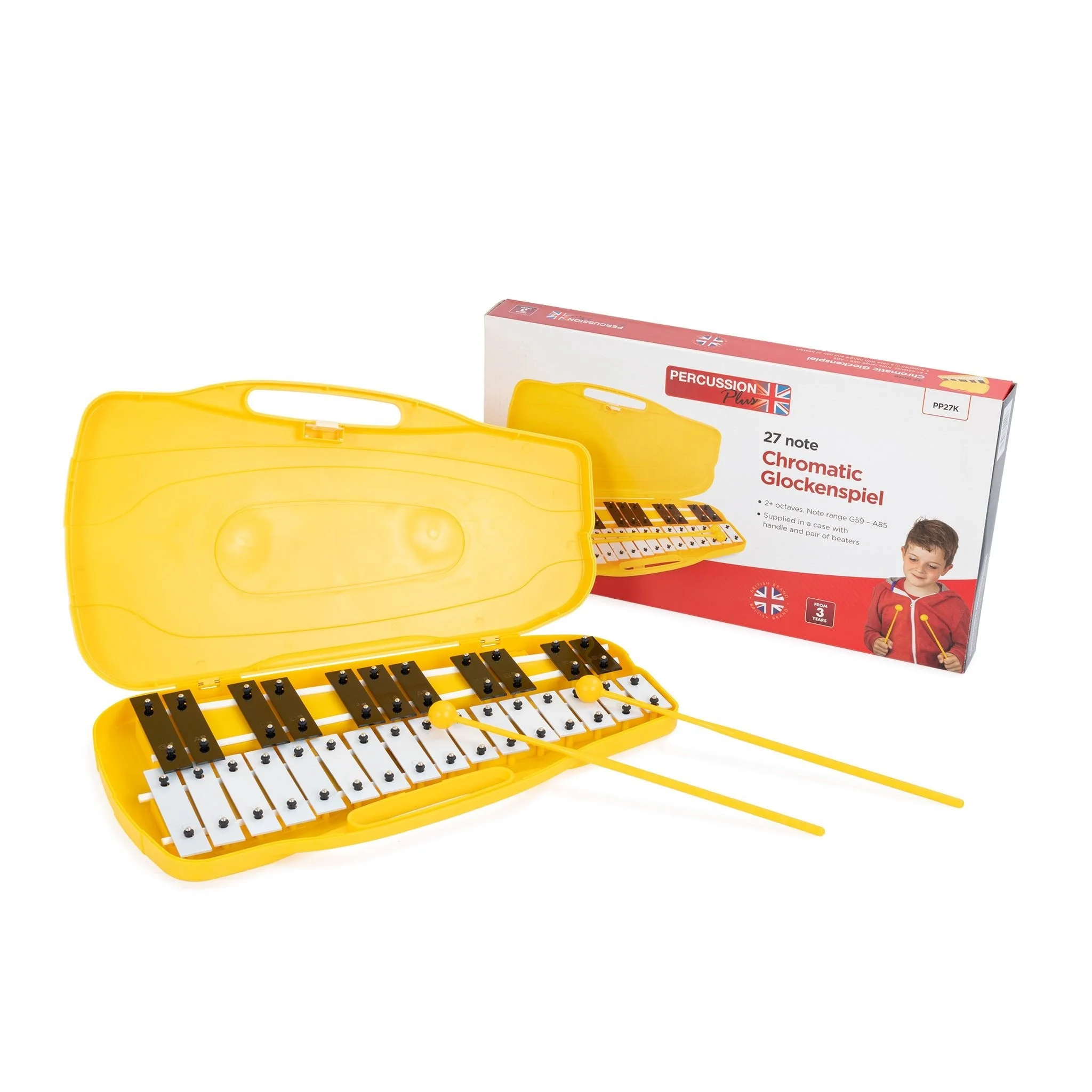
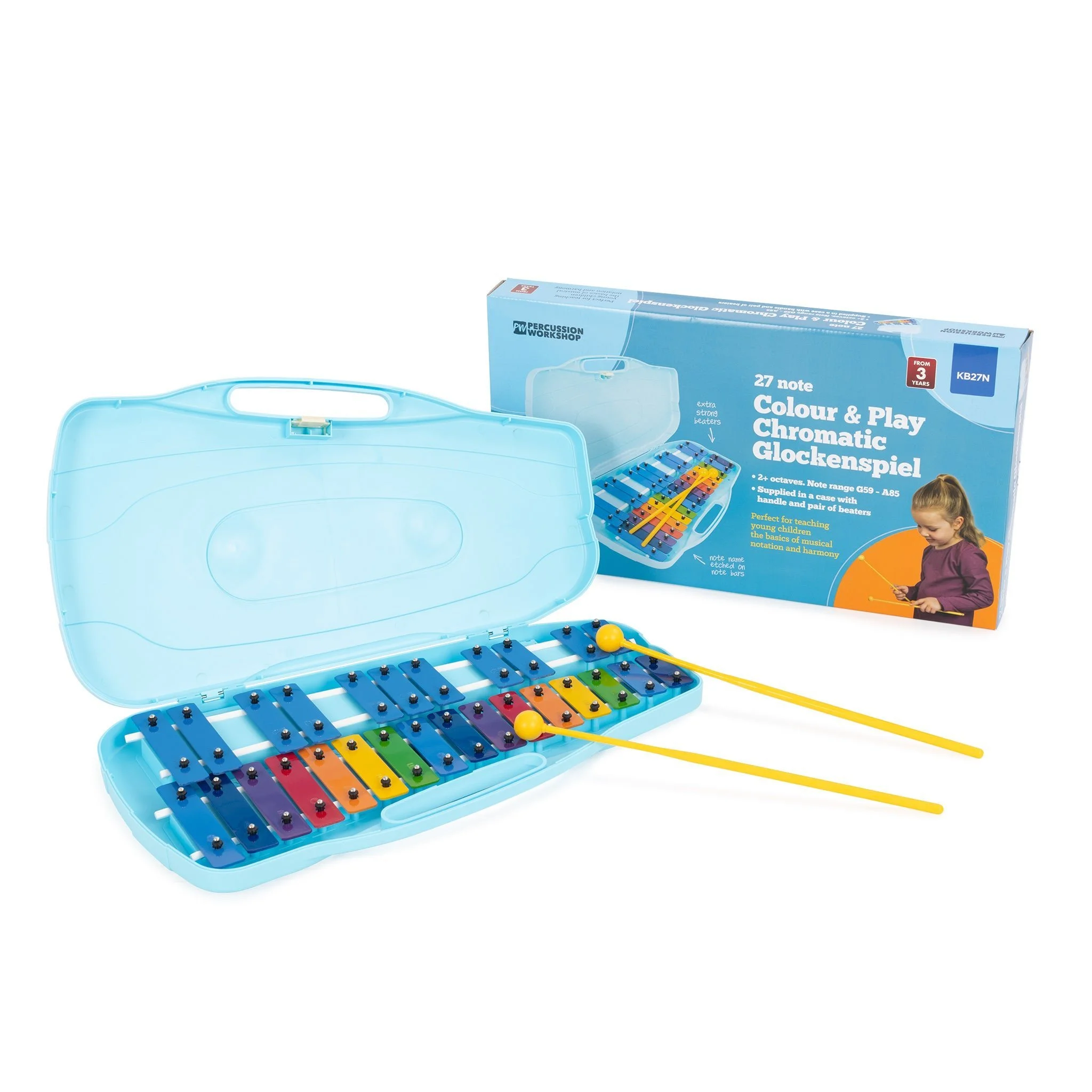
- 27-note glockenspiel (G59–A85, chromatic): Over two octaves, ideal for more complex melodies, class arrangements, and harmonies.
- Colour-coded (27-note): Especially helpful for beginner musicians and mixed-ability classes (including SEND students). Visual note cues reduce the "where is it?" barrier, supporting faster learning and musical progression.
Red Box Models (For a Sturdier, Ensemble-Ready Feel)
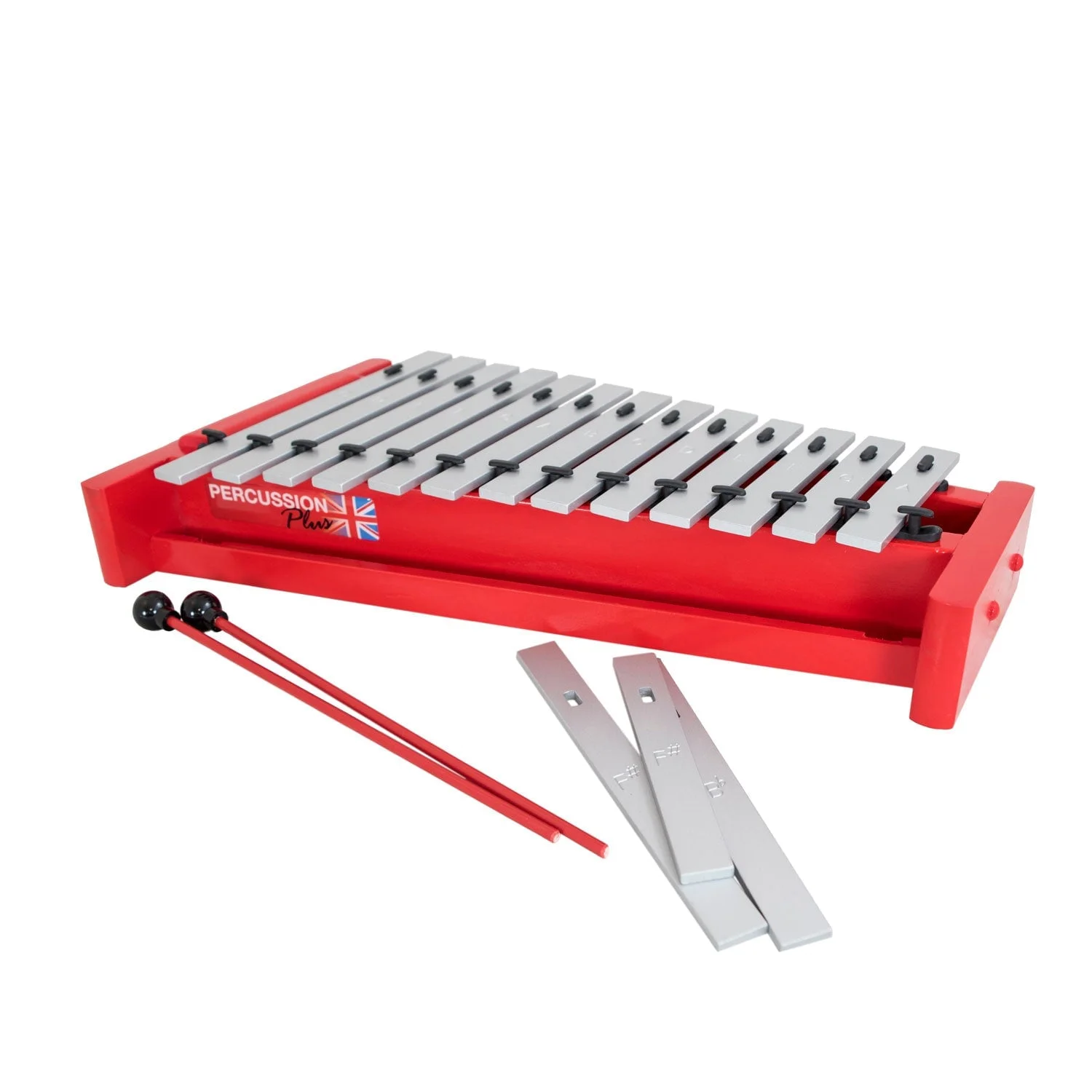
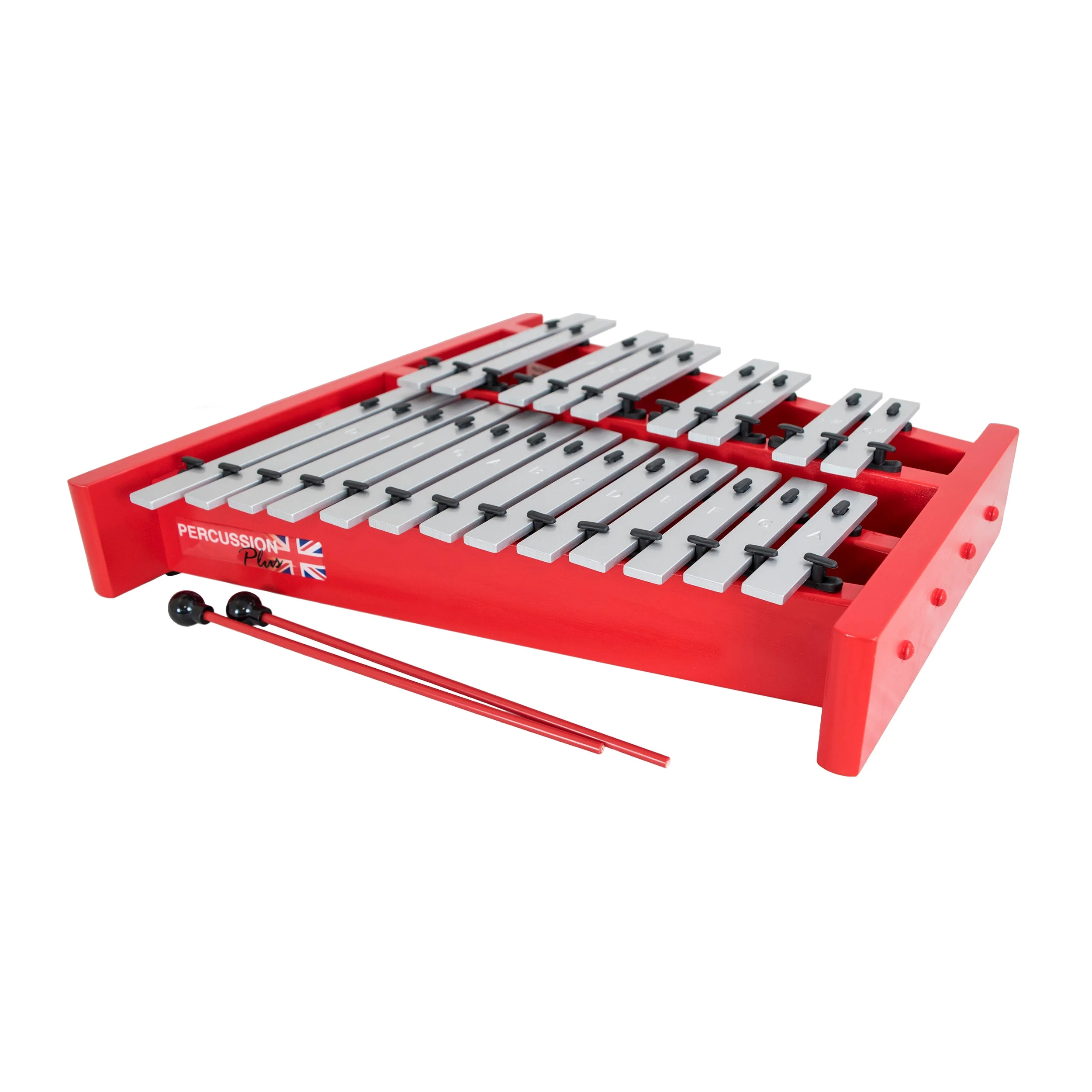
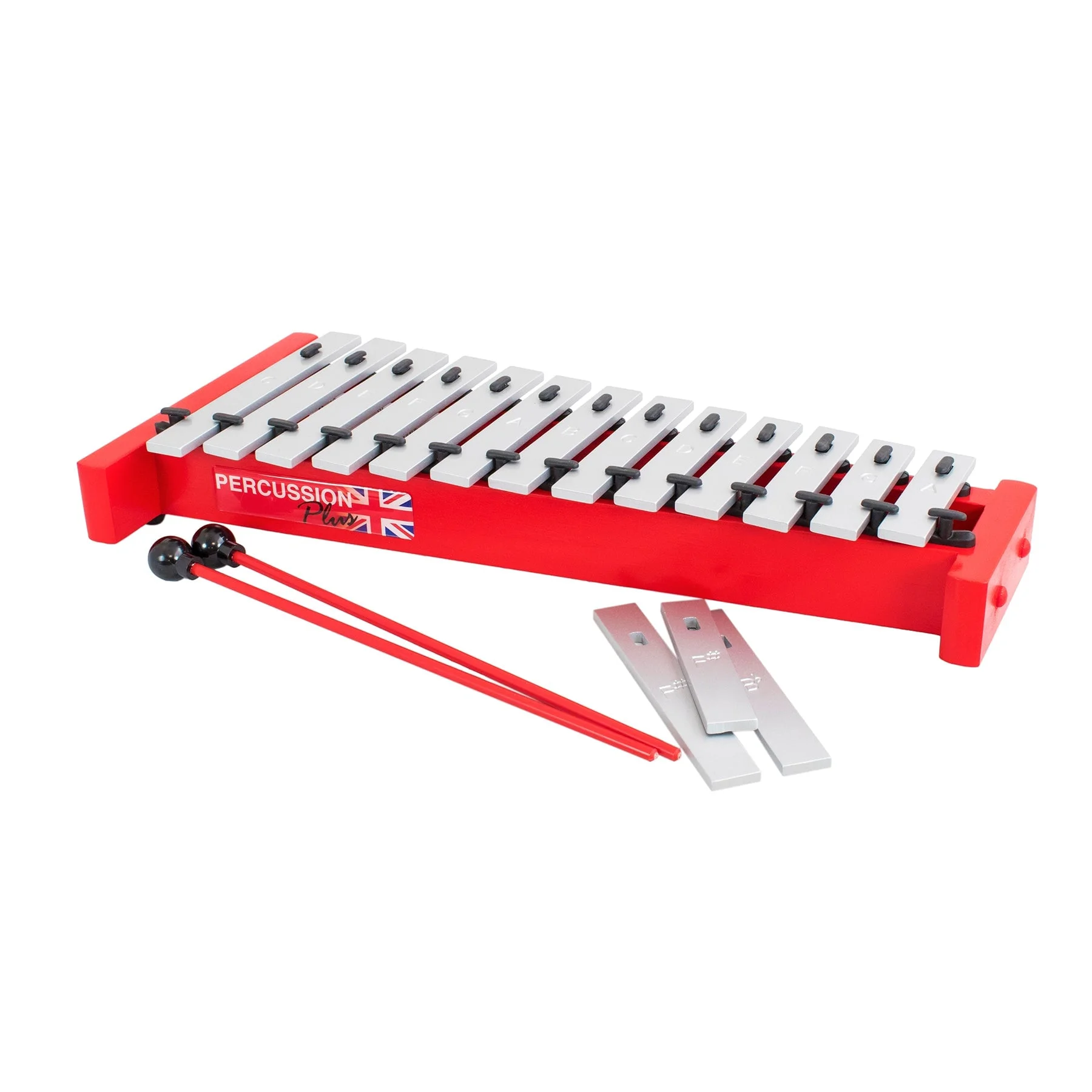
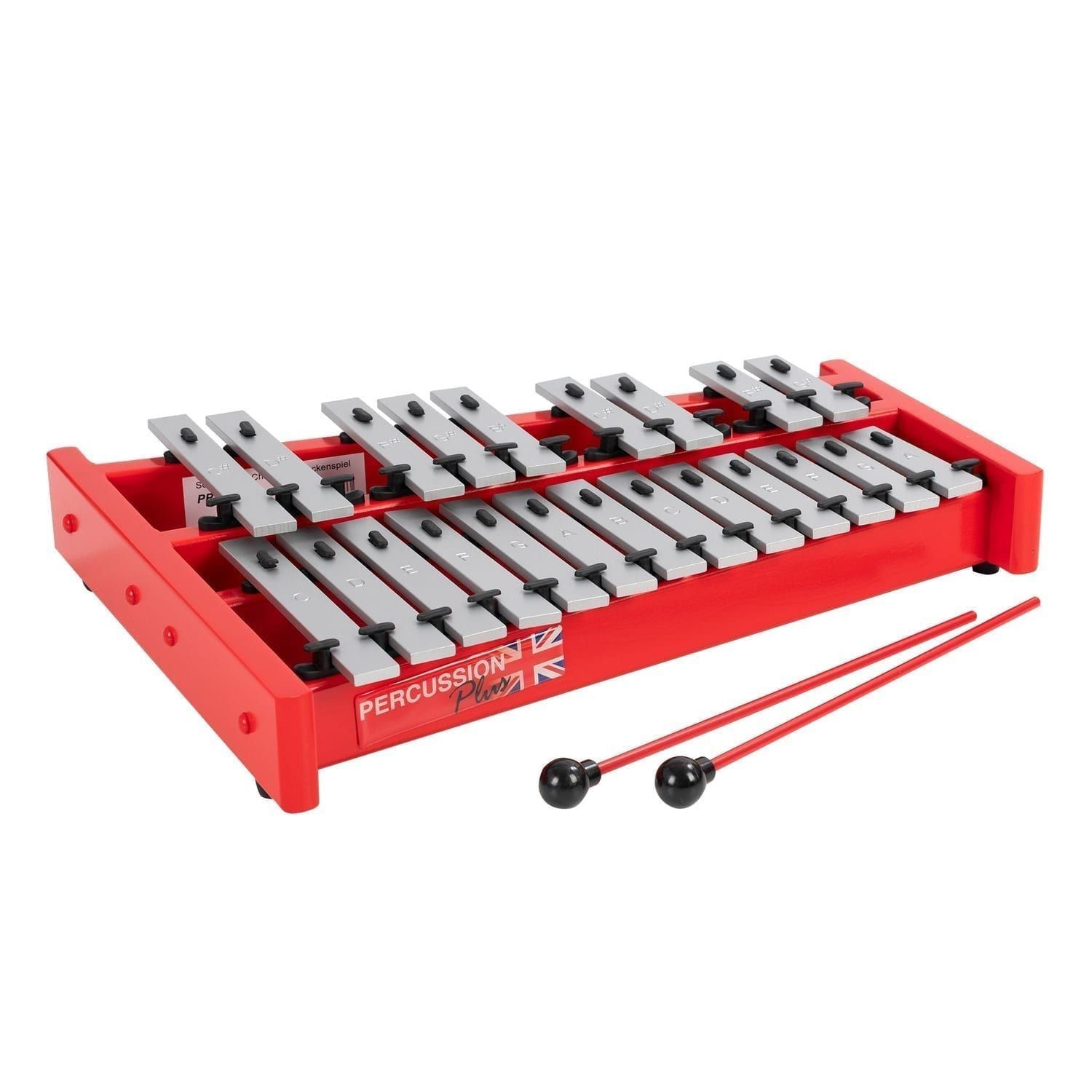
For schools and music departments that need a more durable, ensemble-ready glockenspiel, Red Box models offer high-quality steel bars mounted on a sturdy red poplar wooden base. Some glockenspiel models come with fold-out legs for added resonance, providing a more full-bodied sound.
These models are available in:
- Diatonic glockenspiel options: Great for straightforward classroom melody work, offering a simple note set for beginners.
- Fully chromatic options: Perfect for covering a broader curriculum with more keys, ideal for more advanced students or school ensembles.
Quick Teaching Wins (What They’re Great For)
In class, glockenspiels work brilliantly as:
- Melody carriers that stand out in the room, perfect for teaching melodies.
- Layered ostinatos (two-note and three-note patterns) for developing rhythm.
- Call-and-response games to enhance listening skills and coordination.
- Simple chord-tone parts (root–fifth patterns) for introducing harmony.
- Rounds and partner pieces to build ensemble skills and teamwork.
Care & Storage (Keep Them Sounding Good)
To keep your glockenspiel in top condition:
- Store instruments flat in the case to protect bars and frames.
- Keep beaters in the same case pocket to avoid losing them between lessons.
- Avoid storing in damp areas and wipe the bars lightly after each use if needed.
- Always use appropriate mallets (not hard sticks) to protect tuning and maintain controlled sound in the classroom.
Frequently Asked Questions
What is the difference between a xylophone and a glockenspiel?
A glockenspiel has metal bars and produces a bright, bell-like sound. A xylophone has wooden bars and a warmer tone. Glockenspiels typically carry melody more clearly in classroom settings.
Why is it called a glockenspiel?
The word "glockenspiel" comes from German, meaning "bell play". Historically, its bright tone was similar to that of bells, even though modern glockenspiels use tuned metal bars.
Is a glockenspiel German?
Yes, the term is German, and the instrument has a strong European orchestral history. Today, glockenspiels are widely used around the world, especially in music education.
